Our Location
304 North Cardinal St.
Dorchester Center, MA 02124

The disposable tableware industry is constantly searching for the next “perfect material”.
Over the years, different materials have gained attention:
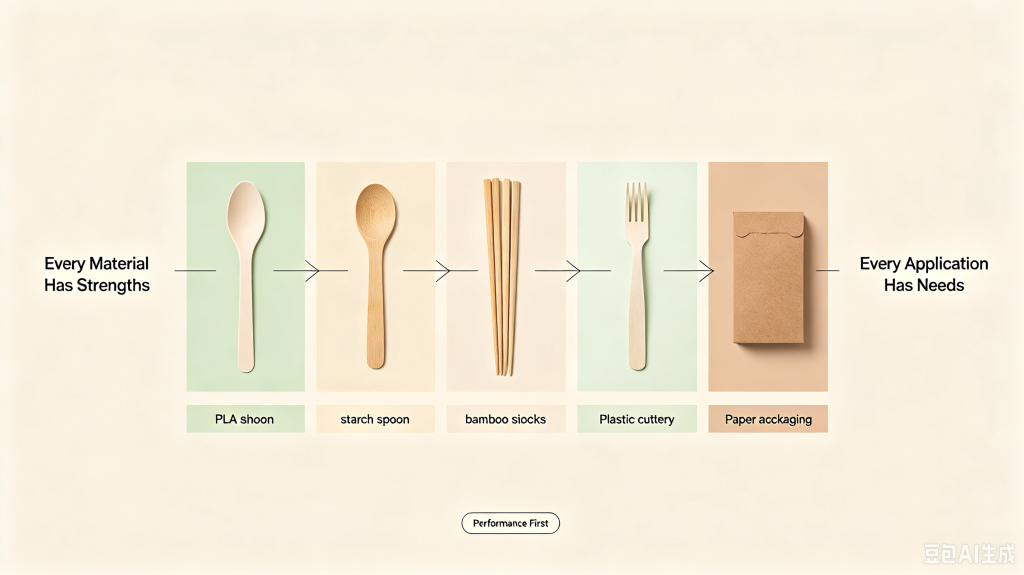
· Paper
· Bagasse
· PLA
· Bamboo
· Starch-based materials
Each innovation brings new opportunities for more sustainable foodservice solutions.
However, one important question is often overlooked:
Are customers choosing materials — or are they choosing solutions?
The future of disposable tableware is not about finding one material that replaces everything.
It is about understanding applications and selecting the right solution for each need.
Every material has its own advantages and limitations.
For example:
PLA-based Tableware
Advantages:
· Plant-based material option
· Suitable for brands seeking alternatives to traditional plastics
Considerations:
· Performance depends on application conditions
Starch-based Tableware
Advantages:
· Plant-based option
· Suitable for certain foodservice applications
Considerations:
· Needs to match specific usage requirements
Bagasse and Paper Products
Advantages:
· Widely used in food packaging
· Suitable for many takeaway applications
Considerations:· Different products require different levels of strength and durabilityThe goal is not to find
one material that works everywhere.
The goal is to find the right solution for the right situation
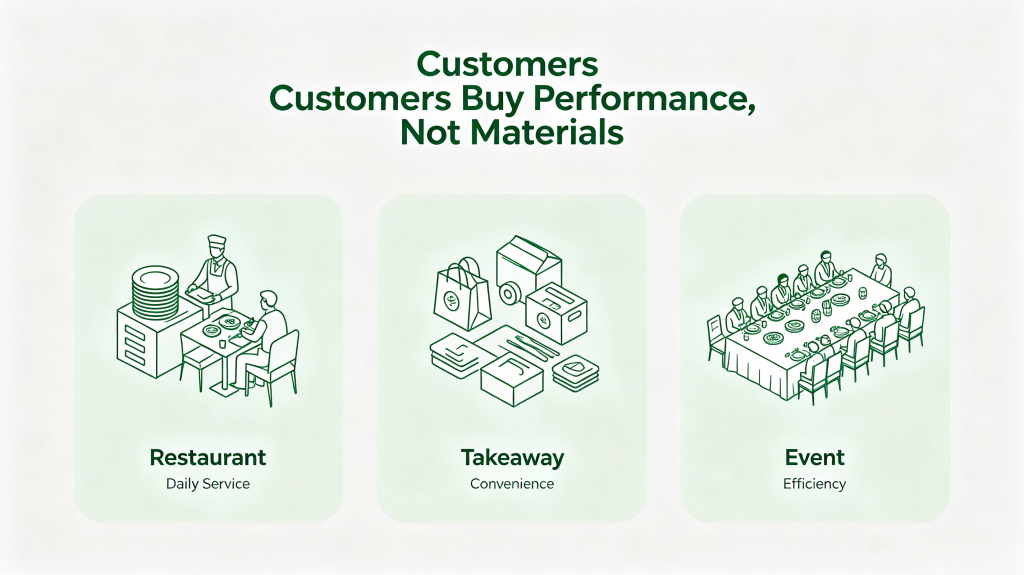
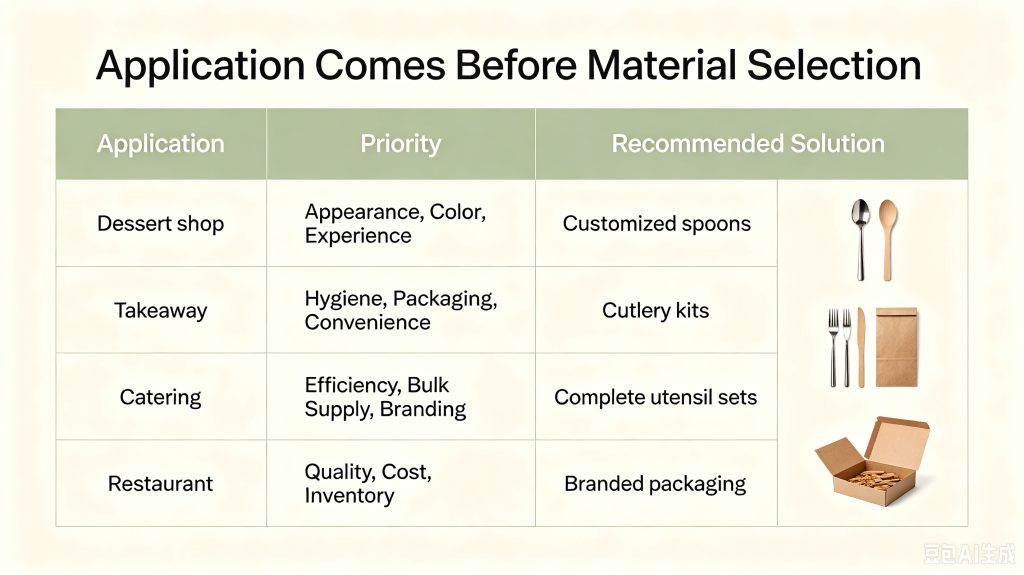
When businesses choose disposable tableware, their real concerns are usually:
Restaurants need:
· Reliable quality during daily operations
· Cost-effective solutions
· Easy inventory management
Takeaway brands need:
· Convenient packaging
· Products that maintain food presentation
· Consistent customer experience
Catering companies need:
· Large-volume supply
· Efficient serving solutions
· Customized branding options
The material itself is only one part of the decision.
The final solution must solve a real business problem.
A successful tableware solution starts with understanding:
· What food will be served?
· How will customers use it?
· How long does it need to perform?
· What brand image should it represent?
For example:
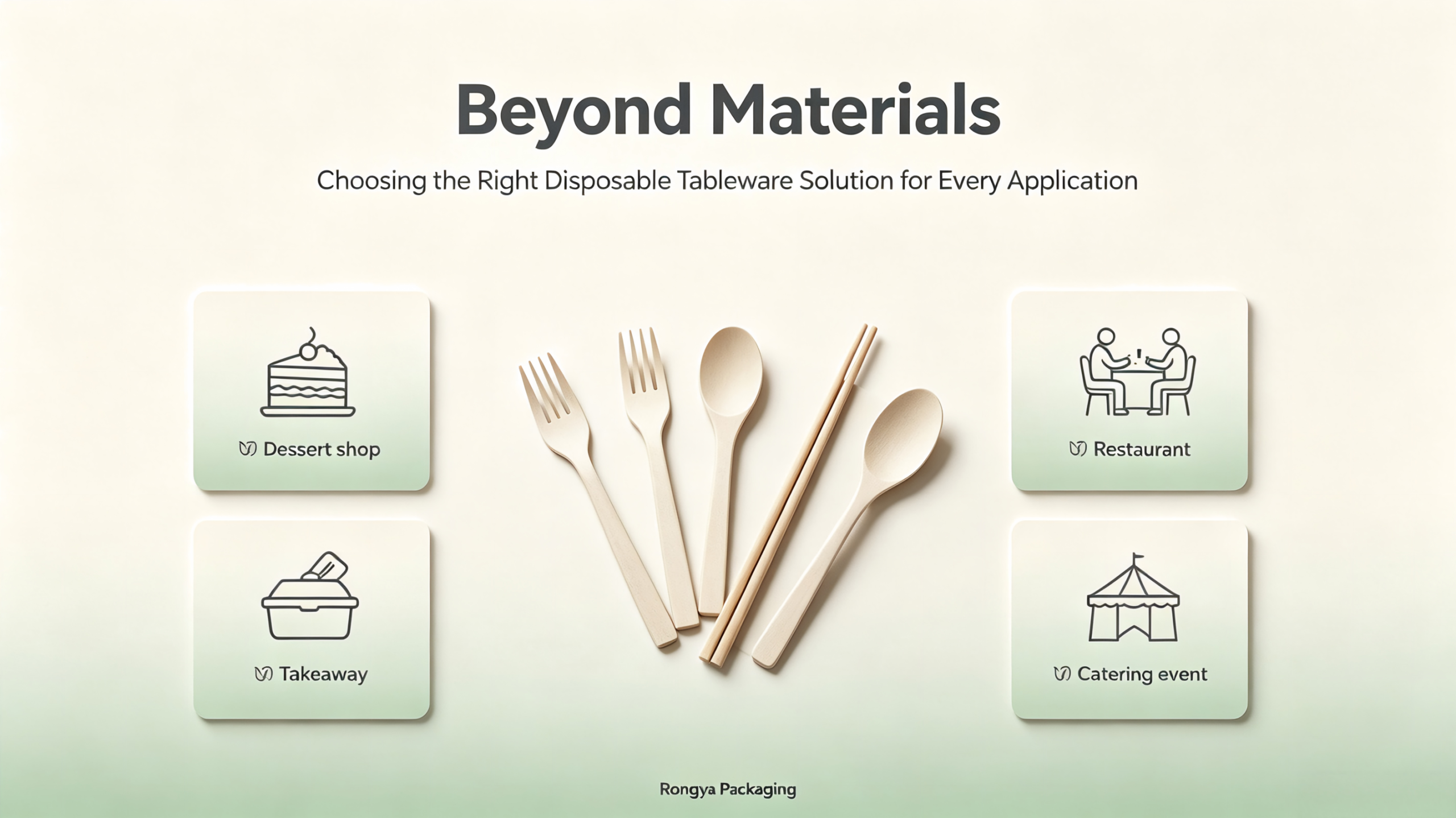
A dessert shop may prioritize:
· Appearance
· Color customization
· Customer experience
A catering company may prioritize:
· Efficiency
· Bulk supply
· Complete cutlery kits
A takeaway business may prioritize:
· Hygiene
· Individual packaging
· Convenience
Different applications require different solutions.
Sustainability is not simply about replacing one material with another.
It is about making smarter decisions.
A truly sustainable solution considers:
✔ Product performance
✔ Customer needs
✔ Production efficiency
✔ End-use environment
The best material is not always the newest material.
It is the material that creates the best balance between function and responsibility.
Conclusion
The future of disposable tableware will not belong to companies promoting only one material.
It will belong to companies that understand customers, applications, and real-world challenges.
At Rongya Packaging, we provide customized disposable tableware solutions for restaurants, catering companies, distributors, and foodservice brands.
From plant-based options to customized cutlery sets, we help customers choose practical solutions for different applications.
Because the future is not about asking:
“Which material is the future?”
It is about asking:
“Which solution is right for this application?”